
Ketamine-Assisted Psychotherapy (KAP)
I provide Ketamine-Assisted Psychotherapy (KAP), a safe and legally available psychedelic therapy option for clients throughout Ohio.


My approach to Ketamine-Assisted Psychotherapy (KAP) is grounded in safety, intention, and deep inner work.
I do not view ketamine as a quick fix or a stand-alone intervention. Rather, it is a powerful therapeutic catalyst that helps quiet the inner critic, soften defenses, and create access to emotions, memories, and parts of the self that may feel blocked in traditional talk therapy.
Preparation is essential in my work. Before any dosing session, we spend time clarifying your intentions, building internal resources, and creating a sense of stability and trust. During the ketamine experience, I hold steady, attuned space—allowing the process to unfold organically while offering gentle guidance when needed.
The medicine often opens a window of expanded awareness; therapy gives that experience meaning and direction.
Integration is where lasting change happens. After each session, we carefully explore the insights, emotions, and imagery that emerged, helping you translate them into practical shifts in your relationships, self-concept, and daily life.
My approach blends trauma-informed care, parts work, nervous system regulation, and depth psychology so that breakthroughs are not just profound—but sustainable. KAP in my practice is about reconnection: to your inner knowing, your body, your truth, and your future. It is not about escaping your life, but about meeting it with greater clarity, compassion, and agency.

The Process
Ketamine-Assisted Psychotherapy begins with a virtual evaluation through a medical team, who review your medical and psychiatric history, provide education, and determine whether you’re an appropriate candidate for treatment. If approved, they create a personalized prescription and monitoring plan, prescribe sublingual ketamine lozenges, and a Brain Box, which includes your blood pressure cuff, a journal and eye mask. You’ll receive guidance on how to take your vitals and safely self-administer the medication prior to beginning our work together.
Once medication is received, we begin preparation sessions to clarify intentions and ensure you feel grounded and supported. Dosing sessions (2 hours) take place either in my office or via telehealth, where you’ll recline comfortably with an eye mask and music while I remain present throughout the experience. Afterward, we engage in integration sessions to process insights and apply them to your life. Better U continues to provide medical follow-ups and prescription management as part of your ongoing treatment plan.
1. KAP Intake Assessment
This initial consultation offers dedicated time to review the KAP informed consent in detail, discuss potential benefits and risks, and answer any questions about the process. It also provides an opportunity to explore your current symptoms, treatment history, and goals to determine whether Ketamine-Assisted Psychotherapy aligns with your clinical needs and readiness.
If KAP appears to be an appropriate fit, a referral will be submitted to Better U to initiate the required medical evaluation and screening process, ensuring that all medical considerations are carefully assessed before treatment begins.
2. Medical Consultation
An initial virtual evaluation is scheduled with a clinician from the Better U medical team. During this appointment, your medical and psychiatric history is reviewed, education about the treatment is provided, and eligibility for KAP is determined.
If approved, the medical team develops a personalized prescription and outcome monitoring plan. A limited supply of sublingual ketamine lozenges—typically enough for the first two KAP sessions—is mailed to your home. You will also receive instruction on monitoring your vitals and safely self-administering the medication prior to beginning dosing sessions.
3. KAP Preparation Session
After receiving the ketamine lozenges, preparation, dosing, and integration sessions will be scheduled. Preparation sessions are structured similarly to standard therapy appointments and take place prior to the experiential dosing session.
These meetings focus on clarifying intentions, reviewing the process, and collaboratively establishing goals to ensure you feel informed, grounded, and aligned before beginning the KAP experience.
4. KAP Experiential Dosing Session
A typical ketamine dosing session lasts approximately 2 hours and takes place in the office or in your own home with a chaperone.
During the session, the ketamine lozenge is self-administered in a comfortable, supportive setting. You will rest in a reclining position, wearing an eye mask and listening to a curated instrumental playlist. While the experience is primarily inward and reflective, therapeutic support is provided throughout to ensure safety, grounding, and attuned presence as needed.
5. KAP Integration Sessions
Following the KAP dosing session, a series of integration therapy sessions will be scheduled to thoughtfully process the experience. These sessions provide space to explore the memories, emotions, imagery, and insights that emerged, helping translate them into meaningful and lasting change. Integration focuses on weaving new awareness into daily life—shifting patterns, strengthening internal resources, and supporting behavioral or relational changes aligned with your goals.
This phase also allows time to assess progress, refine intentions, and prepare both practically and psychologically for any upcoming dosing sessions, ensuring the work remains intentional, grounded, and therapeutically supported.
6. Follow-up Medical Consultation
After the initial KAP session, we will coordinate ongoing follow-up appointments to monitor your response to treatment, assess symptom changes, and ensure continued medical safety. These check-ins also provide an opportunity to adjust dosage if needed and authorize prescription refills for additional ketamine lozenges when clinically appropriate.
The timing of follow-up visits is based on your individualized treatment plan, with appointments occurring at least quarterly, and more frequently if indicated to support optimal outcomes and continuity of care.
KAP Psychotherapy Fees
Below are the therapy fees associated with Ketamine-Assisted Psychotherapy (KAP). These rates are consistent with standard individual and couples therapy sessions. New clients begin with a 60-minute intake assessment to establish care. Preparation and integration sessions are 50 minutes in length, while experiential dosing sessions typically last approximately 2 hours. Some of these fees may be covered by your insurance, if applicable.
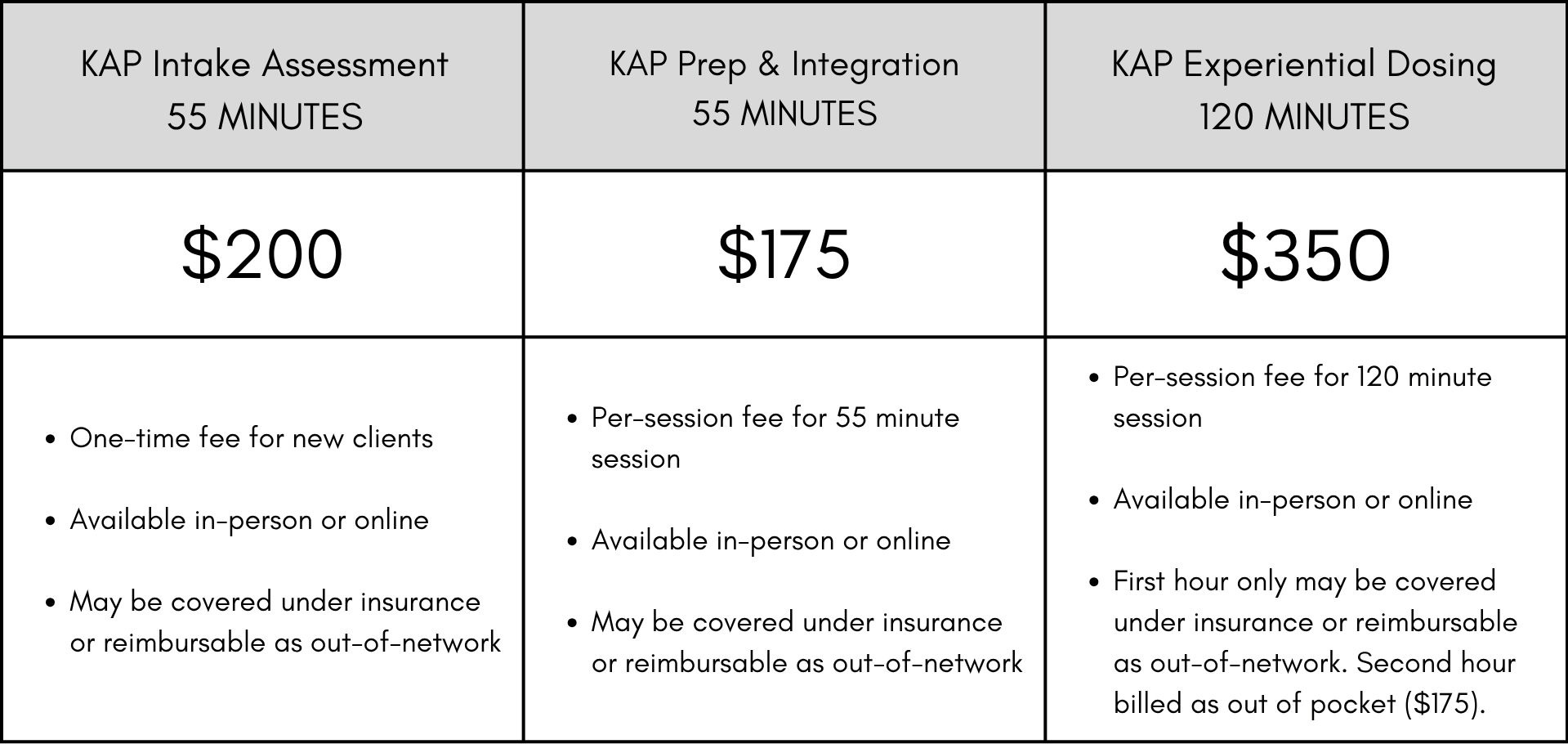
Better U Fees
Below are the outside fees you may pay to Better U for the medical services for KAP.
Introduction
5 Sessions
Introduction package is ideal if your mental health challenges are recent (within the last 12 months).
What's Included:
Transformation
9 Sessions
Transformation package is ideal if your mental health challenges have been affecting you for longer than 12 months.
What's Included:
Ketamine Consultation
To determine if you are a candidate for the psychedelic therapy program.
Virtual Clinical Appointment
A virtual appointment with a licensed-clinician to discuss your health history, lifestyle, and goals. During this appointment your clinician will determine a personalized program and answer any questions you may have.
Treatment Preparation
After receiving your medication(s) in the mail, you have an optional virtual 30-minute treatment preparation appointment with a Better U Certified Integration Guide to help you prepare for your treatments and embark on your journey.
5 Ketamine Sessions
Retrain your brain with evidence-based remote sessions.
Member Portal
• Better U provides a FREE app to provide you the tools to make the most out of your sessions and help you develop sustainable growth.
• Access Psychedelic Therapy protocols, safety guidelines, and follow the steps to help you maximize your sessions with self-guided experiences and integrations.
Integration Sessions
• Integration sessions help you unpack your experience and give you the tools to make the most out of your journey to help you develop sustainable growth.
• Integration is doing the work that’s required to preserve the lessons offered through a psychedelic session and apply them to your daily life. Examination and implementation of what took place during the experience (Thoughts, feelings, epiphanies, visuals, realizations and perspective shifts) makes the difference between a euphoric one-time experience and a lasting meaningful shift in your life.
FREE Brain Box Starter Kit
Brain Box includes: blood pressure cuff, app instructions, meditation mask, heart diffraction glasses, journal + pen.
$100 per session
5 Sessions = $500 Total
Ketamine Consultation
To determine if you are a candidate for the psychedelic therapy program.
Virtual Clinical Appointment
A virtual appointment with a licensed-clinician to discuss your health history, lifestyle, and goals. During this appointment your clinician will determine a personalized program and answer any questions you may have.
Treatment Preparation
After receiving your medication(s) in the mail, you have an optional virtual 30-minute treatment preparation appointment with a Better U Certified Integration Guide to help you prepare for your treatments and embark on your journey.
9 Ketamine Sessions
Retrain your brain with evidence-based remote sessions.
Member Portal
• Better U provides a FREE app to provide you the tools to make the most out of your sessions and help you develop sustainable growth.
• Access Psychedelic Therapy protocols, safety guidelines, and follow the steps to help you maximize your sessions with self-guided experiences and integrations.
Integration Sessions
• Integration sessions help you unpack your experience and give you the tools to make the most out of your journey to help you develop sustainable growth.
• Integration is doing the work that’s required to preserve the lessons offered through a psychedelic session and apply them to your daily life. Examination and implementation of what took place during the experience (Thoughts, feelings, epiphanies, visuals, realizations and perspective shifts) makes the difference between a euphoric one-time experience and a lasting meaningful shift in your life.
FREE Brain Box Starter Kit
Brain Box includes: blood pressure cuff, app instructions, meditation mask, heart diffraction glasses, journal + pen.
Accepted Payment Methods
All major credit and debit cards are accepted, including FSA and HSA cards.
Monthly payment options are available with Affirm and AfterPay
Insurance Information
Payment for psychotherapy sessions is the client’s responsibility. Therapist will submit claims to insurance, if applicable. If insurance is out-of-network, a detailed superbill can be provided upon request, which may be submitted to your insurance company for potential out-of-network reimbursement, depending on your specific plan.
To better understand your benefits, contact the member services number on the back of your insurance card and inquire about coverage for outpatient mental health services and medical consultations.
Frequently Asked Questions
Can I use a different KAP company?
Yes. If you feel more comfortable using another company, we can discuss your options.
What is Ketamine-Assisted Psychotherapy (KAP)?
Ketamine-Assisted Psychotherapy (KAP) is an evidence-informed treatment that combines the therapeutic effects of ketamine with psychotherapy to help individuals experiencing depression, anxiety, PTSD, trauma, chronic stress, and other mental health conditions. During KAP, ketamine is prescribed by a qualified medical provider and used in carefully monitored therapeutic sessions to create a temporary state of increased openness, reduced psychological defenses, and enhanced neuroplasticity—the brain's ability to form new neural connections. This unique state can make it easier to process difficult emotions, gain new perspectives, and work through experiences that may feel overwhelming in traditional talk therapy alone. KAP is more than simply taking ketamine; it is a structured process that includes preparation sessions, guided dosing sessions, and integration therapy to help transform insights into meaningful, lasting changes in daily life.
How does KAP work?
Ketamine-Assisted Psychotherapy works by combining the biological effects of ketamine with the healing power of psychotherapy. Ketamine temporarily increases neuroplasticity—the brain's ability to form new neural connections—while reducing the intensity of fear-based thinking and rigid emotional patterns. This creates a unique window where individuals often experience greater openness, self-compassion, and psychological flexibility, making it easier to process painful memories, explore difficult emotions, and develop healthier perspectives.
During this period, a therapist guides the experience through preparation, supportive dosing sessions, and integration therapy, helping clients transform insights into lasting change. Rather than masking symptoms, KAP aims to address the underlying patterns that contribute to depression, anxiety, PTSD, trauma, and other mental health concerns by helping the brain and nervous system learn new ways of thinking, feeling, and responding.
What conditions can be treated with KAP?
Ketamine-Assisted Psychotherapy (KAP) has shown promising results for individuals experiencing treatment-resistant depression, anxiety disorders, post-traumatic stress disorder (PTSD), complex trauma, obsessive-compulsive disorder (OCD), chronic stress, burnout, grief, and certain chronic pain conditions. It may also benefit people struggling with low self-worth, emotional numbness, relationship difficulties, and persistent patterns that have not improved with traditional talk therapy alone. While ketamine is not a cure and may not be appropriate for everyone, research suggests it can provide rapid symptom relief for many individuals while creating an opportunity for deeper therapeutic work. A comprehensive medical and psychological evaluation is completed before treatment to determine whether KAP is a safe and appropriate option based on each person's medical history, mental health needs, and treatment goals.
What are the risks and benefits of KAP?
Ketamine-Assisted Psychotherapy (KAP) offers the potential for significant emotional healing by combining the therapeutic effects of ketamine with evidence-based psychotherapy. Many individuals report reduced symptoms of depression, anxiety, PTSD, and chronic stress, along with increased emotional openness, greater self-awareness, improved cognitive flexibility, and a renewed sense of hope. The temporary increase in neuroplasticity may help clients break free from long-standing patterns of negative thinking and process difficult experiences with greater compassion and perspective. When paired with skilled preparation and integration therapy, these experiences can lead to meaningful, lasting changes in emotional well-being and daily functioning.
Like any medical treatment, KAP also carries potential risks and side effects. During the ketamine experience, some individuals may experience dizziness, nausea, increased blood pressure or heart rate, dissociation (feeling detached from the body or surroundings), temporary anxiety, emotional intensity, or changes in perception. These effects are generally short-lived and resolve as the medication wears off. Ketamine is not appropriate for everyone, and individuals with certain medical conditions or psychiatric disorders may not be good candidates. For this reason, all clients complete a thorough medical evaluation before treatment, and ketamine is prescribed and monitored by a qualified medical provider. Ongoing communication between the medical provider and therapist, along with careful preparation and integration, helps maximize the potential benefits while minimizing risks.
How long does each KAP session typically take?
The length of a Ketamine-Assisted Psychotherapy (KAP) session depends on the stage of treatment. Preparation and integration sessions typically last 50–60 minutes, while ketamine dosing sessions generally last approximately 2 hours. During a dosing session, time is allotted for reviewing intentions, administering the ketamine, supporting the therapeutic experience while the medication is active, and allowing adequate time for recovery before returning home. Because ketamine can temporarily affect coordination, judgment, and reaction time, clients must arrange for a responsible adult to drive them home after each dosing session and should avoid driving, operating machinery, or making important decisions until the following day. This comprehensive approach ensures that clients have the time and support needed to safely process their experience and maximize the therapeutic benefits of KAP.
How many KAP sessions do I need?
The number of Ketamine-Assisted Psychotherapy (KAP) sessions needed varies based on each person's individual needs, treatment goals, symptoms, and response to ketamine. KAP is not a one-size-fits-all treatment; it is a personalized therapeutic process that includes preparation, ketamine dosing sessions, and integration therapy.
Many KAP treatment plans begin with a series of sessions over several weeks, allowing time for clients to prepare, experience the benefits of ketamine, and integrate new insights into their everyday lives. Some individuals notice meaningful changes after only a few sessions, while others benefit from a longer course of treatment to address complex trauma, long-standing patterns, or deeper emotional concerns.
The focus of KAP is not simply the number of ketamine experiences, but the therapeutic work that happens before, during, and after each session. Preparation helps establish safety and intention, dosing sessions provide an opportunity for deeper exploration, and integration sessions help translate insights into lasting emotional and behavioral change. Your therapist and medical provider will work with you to determine the treatment approach that best fits your goals, needs, and overall health.
What should I expect during a KAP session?
A Ketamine-Assisted Psychotherapy (KAP) session is a structured, supportive experience designed to help you safely explore your inner world while receiving the therapeutic benefits of ketamine. The process typically includes three phases: preparation, the dosing experience, and integration.
Preparation Session:
Before your first dosing session, you will meet with your therapist to build a foundation of safety, discuss your goals, identify intentions for the experience, review coping skills, and learn what to expect. Preparation helps create a sense of trust and readiness so you can approach the experience with curiosity and openness.
Ketamine Dosing Session:
During the dosing session, you will be in a comfortable, private, and supportive environment. After reviewing your intention and receiving ketamine as prescribed by your medical provider, you will be encouraged to relax and turn your attention inward. Many clients choose to use calming music, an eye mask, blankets, or grounding practices to support their experience. Ketamine may create changes in perception, emotions, thoughts, and body sensations. Some people experience a sense of connection, insight, emotional release, or a shift in perspective. Your therapist remains present to provide support, reassurance, and guidance throughout the process.
Integration Session:
After the dosing experience, integration therapy helps you make meaning of what you experienced and apply insights to your everyday life. This may include exploring emotions, identifying new perspectives, processing memories, strengthening self-compassion, and developing practical steps toward continued healing.
Every KAP experience is unique. Some people describe it as deeply meaningful and transformative, while others experience a quieter sense of reflection or emotional clarity. The goal is not to force a particular experience, but to create a safe environment where healing, awareness, and growth can naturally unfold.
What is the cost of a KAP session?
The cost of Ketamine-Assisted Psychotherapy (KAP) varies depending on the provider, treatment structure, and the number of preparation, dosing, and integration sessions included. KAP involves both a medical component and a psychotherapy component. The medical evaluation, ketamine prescription, and medication costs are provided through a qualified medical provider, while psychotherapy services are provided by a licensed therapist.
Insurance coverage for KAP varies. Some insurance plans may provide coverage for the psychotherapy portion of treatment, and in some cases, the medical evaluation may be eligible for insurance reimbursement depending on the provider and plan. Ketamine medication itself is often not covered when used specifically for mental health treatment because this use may be considered off-label. Clients should check directly with their insurance provider and medical provider to understand their benefits and potential out-of-pocket costs.
At InPowering Pathways, KAP follows a structured therapeutic model that includes preparation, ketamine dosing support, and integration sessions. The focus is not simply on the medication experience, but on providing a safe, intentional, and therapeutic process that supports meaningful emotional healing and long-term change. A personalized treatment plan and cost estimate will be discussed before beginning services.


Important links
© 2026 InPowering Pathways - All Rights Reserved.
